Migration
Migration Youth Group
During the cycle of the project the social and health consequences of the labour migration from the villages and cities became more dramatic than expected 2004/5.
Particularly in children, youth and elderly ‘left behind’ alone, the impact was visible and the project adjusted to this growing problem.
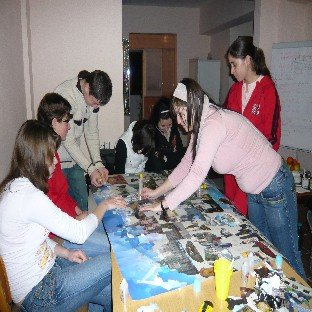
The Migration youth group’ was initiated by the project and formed by children affected by migration and children whose parents were still at home. The project developed examples with the group how to do concrete activities and not to victimize the children like mainly in the Romanian media – particularly TV. Part of this concept is also to see the positive aspect of the labour migration. The youth in the group made very clear that they do not want to be seen as victims and that they understand their parents (to leave to earn money and improve the life of their children) - even if they are suffering from their absence.
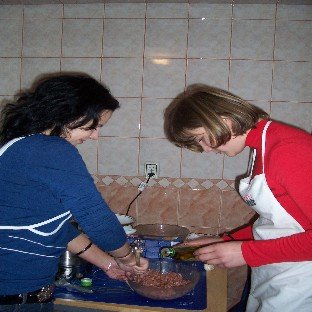
The project gave this attitude a ‘voice’ by supporting the ideas proposed and developed in the group: most liked was the idea of cooking classes with cooking dishes from the countries the parents were now working; different trainings like for health education and communication and a project in ‘career advise/career opportunities’ after leaving school.
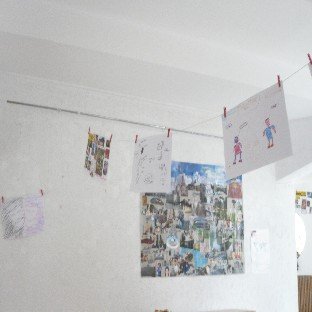
Workshops with children of migrant parents from Botosani, Flamanzi and Dorohoi produced drawings which were then displayed during the public event “Here and There – Exhibition and Film Festival” organised by the project between 27-29 March 2008 in order to raise awareness about the social and health consequences of migration. Two film productions from Switzerland were among the films which were shown.
Migration of health professionals
The lack of political will to integrate the AMC as a regular and stable occupation in the Romanian Health system leads to the ongoing situation that the labour contracts are limited and the salaries are not secured. Nurses are leaving the work as Community nurse and are either leaving Romania or try to find more secure and attractive positions in hospitals or in private practices/clinics of Family Doctors and Specialists.
In Iasi County it led to such a high fluctuation of AMC that plans for community group meeting rooms in selected communes had to be given up because the AMC had left and the ASP could not find nurses to fill the positions. In the KASP end line study 2008 nearly half of the AMC of the baseline survey of 2006 had left and only 9 of 25 were available for the study. After the mid-term evaluation a proactive strategy led to intensifying/concentrate of activities in Botosani County and to start to include also the county Vaslui as the more underdeveloped/poorer county compared to Iasi. Furthermore a positive strategy is to discuss the problem on a broad scale e.g. on conference and workshops and the project reached widespread recognition. Additionally the project is given positive examples how to improve the working conditions of the community nurses and the cooperation among the service providers on the community level.
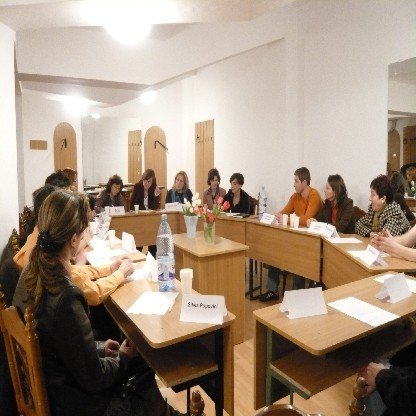
A first step for an ‘integrated’ discussion about professionalization and the problem of labour migration of nurses was done with the Workshop about labour migration of nurses in the framework of the End-of-Phase 1 event of the project 29 March 2008. SRC/FSM made possible through this workshop that nurses working in Italy and Spain, nurses considering leaving Romania and those who came back from abroad could discuss the different aspects of labour migration and how to prevent the drain of Nurses from Romania.
The event ‘Here and There – Exhibition and Film Festival” organised by the project between 27-29 March in order to raise awareness about the social and health consequences of labour migration included this Workshop about Migration of Nurses. Features and interviews in the Romanian TV and Radio about the event reached Awareness beyond the region of the two counties. Additionally through Articles in a National Romanian journal and a National journal in the Republic of Moldova visibility on National and ‘cross-border’ level was attained.